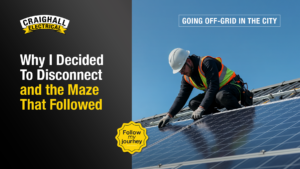
Johannesburg’s power landscape is shifting fast and this time, the impact goes beyond load shedding schedules. With City Power now moving certain non-vending and pre-paid users onto post-paid billing with fixed monthly fees, many residents are facing higher costs, less control and more uncertainty.
It’s forcing an important question:
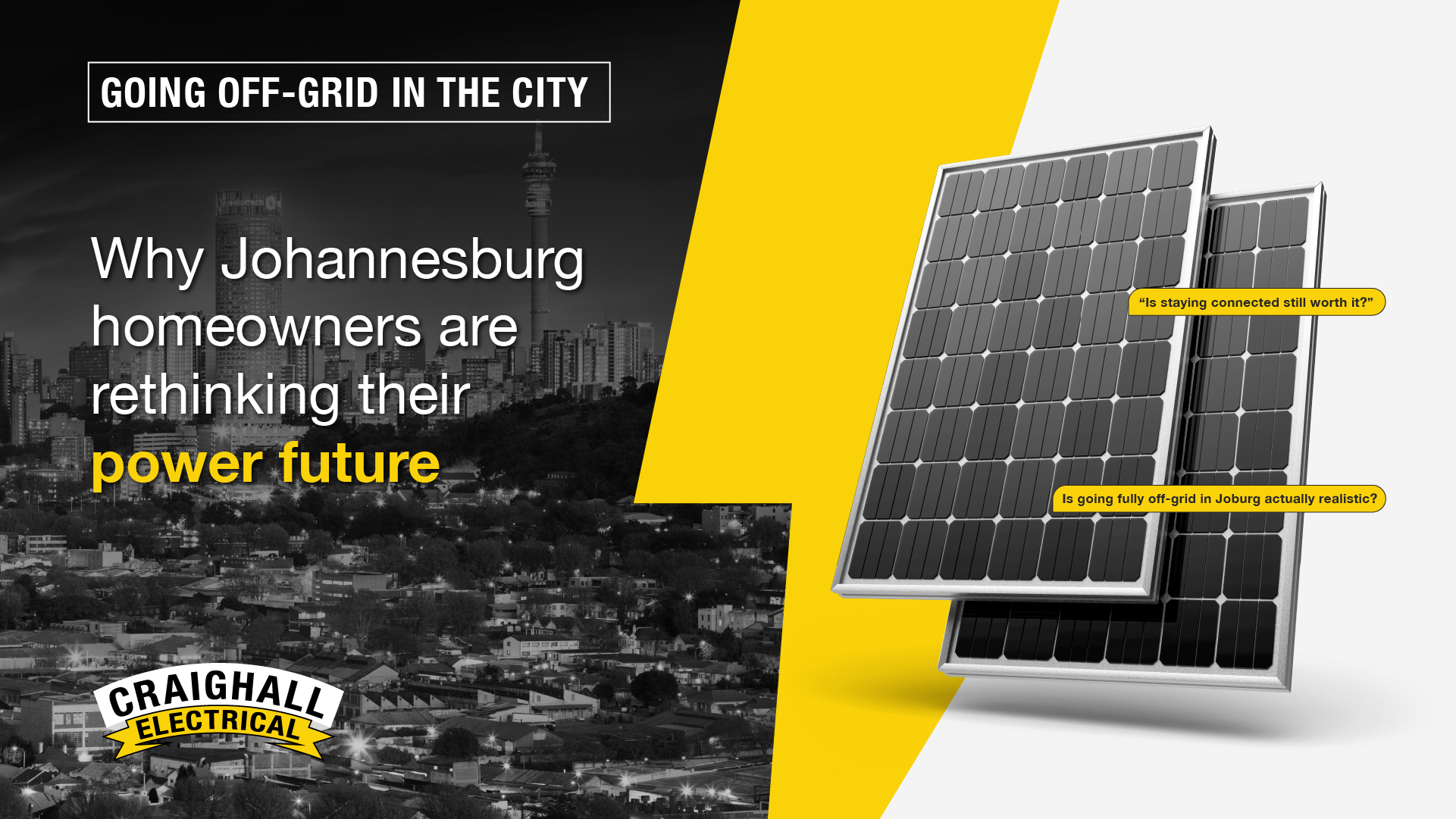
“Is staying connected still worth it?”
For some, the grid remains a security blanket.
For others, it’s becoming a financial and practical burden – opening the door to a new conversation:
Is going fully off-grid in Joburg actually realistic?
I believe it is. And I’m about to show you how.
My starting point
I’ve been living mostly off-grid for the past two years – my system keeps everything running during outages, failures and load shedding. But now, I’m taking the next step:
disconnecting completely from the municipal supply.
As an electrical contractor working with solar, hybrid systems and energy resilience every day, I believe credibility comes from personal experience. If I’m guiding homeowners and businesses through long-term energy decisions, then I should walk the same path myself.
This isn’t a stunt – it’s a real-time case study designed to help people make informed, practical decisions.
What’s changing for Joburg homeowners
City Power’s latest shift is landing on top of an already fragile system. Residents are dealing with:
- Unreliable infrastructure
- Cable theft and transformer failures
- Rising tariffs
- Ageing distribution networks
- Shifting compliance requirements
- Long-term uncertainty
And now, in some cases:
higher fixed fees, even when consumption is low.
For many, it’s no longer just about keeping the lights on –
it’s about control, cost and long-term independence.
What this Urban Off-Grid journey will explore
Over the next few months, I’ll be documenting my full disconnection process – step by step – from the perspective of both a homeowner and a contractor who has designed and installed hundreds of systems.
You can expect clear, practical guidance on:
1. Understanding your load profile
Where your real energy needs are and why guessing leads to overspending.
2. The financial realities
Upfront costs, savings over time, and the often-ignored components of long-term system ownership.
3. Smart system design
Panels, batteries, inverters, safety and redundancy – in simple, actionable language.
4. Hidden challenges and blind spots
Permits, roof layout, load spikes, SSEG requirements and the details most homeowners only discover later.
5. Real-world lessons
Because things can go wrong and that’s where the best learning happens.
6. Life after disconnection
How a fully off grid home actually behaves day to day.
The goal:
Help Joburg homeowners make confident, informed decisions about their energy future.
Why We’re Doing This?
At Craighall Electrical, we’ve always believed that energy independence starts with understanding, not sales pressure.
This journey is about:
- Transparency
- Practical guidance
- Real data
- Lived experience
- Long-term support
Over time, we’ll open a space where you can ask direct, honest questions – a simple Ask Mike option for anyone wanting clarity before making a major energy decision.
A Final thought before the journey begins
Urban off-grid living isn’t extreme anymore.
It isn’t reserved for people with huge budgets.
And it absolutely isn’t a fantasy.
It’s a technical, structured, achievable process –
if you know what to consider, how to design it, and what to expect.
I’m looking forward to sharing this journey with you.
More soon,
Mike