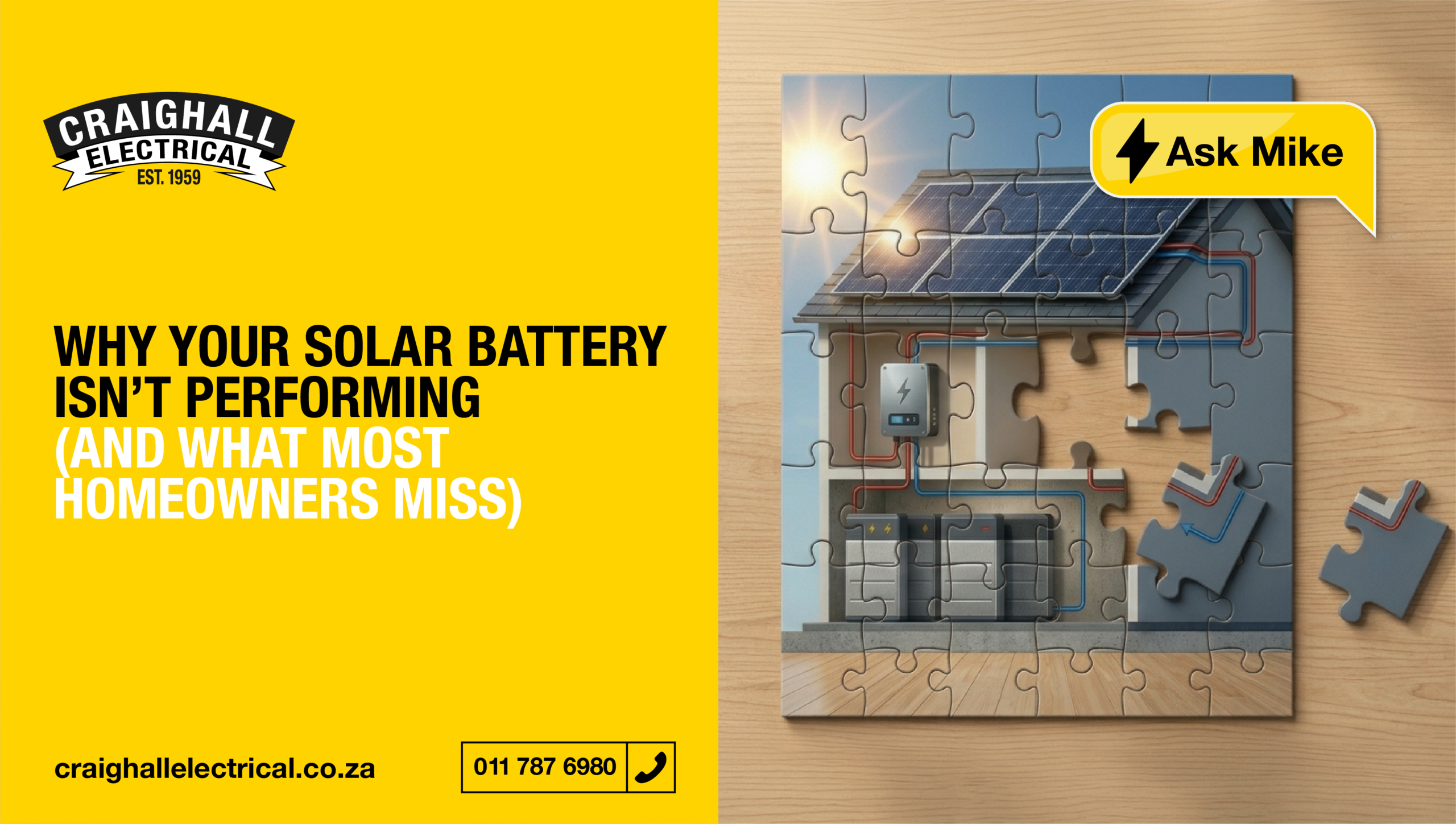
At the moment, there’s a noticeable trend in the issues I’m being called out for and often, it comes back to solar system design.
More specifically, homeowners are calling me out because they’re losing power and assume there’s an electrical fault but often the problem is with the solar system or battery.
In many cases, the system isn’t necessarily broken – it’s either not designed properly, or it’s not being used in a way that allows it to perform at its best.
The part everyone invests in but doesn’t always understand
Your battery bank is often the most expensive part of your solar system, which is exactly why it needs to last.
The challenge is that many people think of batteries as something you install once and forget about. But lithium batteries don’t quite work like that. They naturally lose capacity over a moderate amount of time (8 years +) – that is simply the nature of the chemistry – but what I’m seeing more and more is batteries underperforming far earlier than they should (2 to 4 years)
And that usually comes down to two things: how the system was designed, and how it’s being used day to day.
What is actually going on inside your battery – how a solar battery actually works
Inside the steel battery unit are tens to/or hundreds of smaller cells, not that different in concept to what powers your phone. For the battery to perform properly, all of those cells need to work together consistently.
The system is managed by a Battery Management System (BMS), which monitors voltage, temperature and charging behaviour to keep everything operating safely and efficiently.
In a financially optimised for return system, your battery should be charging as much as possible from solar and only relying on the grid or a generator when and only if necessary.
Common solar system design mistakes that affect battery performance and where most solar systems fall short
The biggest issue I see is in the design.
A solar system isn’t just a collection of parts – it’s a balance. If one part is out, the whole system starts to struggle. An inverter that’s too small will overload and often trip. Too few panels mean your batteries never fully charge. And a battery that’s too large can sound like a good idea, but if it’s not being properly cycled daily, it can affect its long-term health.
What often happens is that people buy components based on price or availability, sometimes directly from a retailer, without the Seller or Buyer understanding how they use power.
It might work – but it won’t work well.
Why battery balancing matters for performance, the part most people don’t know
Even with a well-designed system, how you use it matters.
Your battery is made up of multiple cells, and for it to perform properly, those cells need to stay aligned. Over time, the data drifts, and if that isn’t corrected, performance starts to drop.
This is where battery balancing comes in.
Every now and then, the battery needs to run down to around 20% and then be charged back up to 100% in one full cycle. This allows the system to rebalance the cells and maintain performance.
It doesn’t need to happen often, but it should happen roughly once a month. And in some cases, that may mean using the grid or a generator to top up if there isn’t enough solar available.
It’s a small cost – but it can make a big difference to the life of your battery.
Mike’s take
What I’m seeing at the moment isn’t a failure of solar – it’s a gap between expectation and understanding.
Solar works incredibly well when it’s designed properly and used correctly. But it’s not a one-size-fits-all solution, and it’s definitely not something you want to piece together without the right advice.
Top tip from Mike
Before you buy anything, speak to someone who can design the system around your actual needs – not just sell you components.
It might feel cheaper to go direct, but in the long run, it often ends up costing more to fix or replace a system that wasn’t set up properly in the first place.
At Craighall Electrical, we’re deliberate about the battery brands we work with – they are typically from local suppliers with a local technical desk, such as Freedom Won and BSL.
It is not just about performance. It’s about support. These are systems that can be serviced locally, by trained technicians and that is what makes the real difference over time.
If you found this article interesting, make sure to follow us on Facebook or Instagram to stay updated. Or if you have any questions and need more information, email Mike at askmike@craighallelecritcal.co.za.
Frequently asked questions about solar battery performance
- Why is my solar battery not charging fully?
- How long should a solar battery last?
- What causes a solar battery to fail early?
- Do solar batteries need maintenance?
- What is battery balancing and why is it important?