The conversation I’m having with homeowners right now.
One of the interesting things about being an electrician is that you start to notice patterns in the calls you receive.
Some weeks everyone is asking about compliance certificates. Other times it’s solar installations, outdoor lighting or office electrical upgrades.
Right now, Mike from Craighall Electrical says his phone is ringing with questions about batteries and portable inverter systems.
So, we thought we’d turn those conversations into a short series – a chat with Mike about what’s making his phone ring.
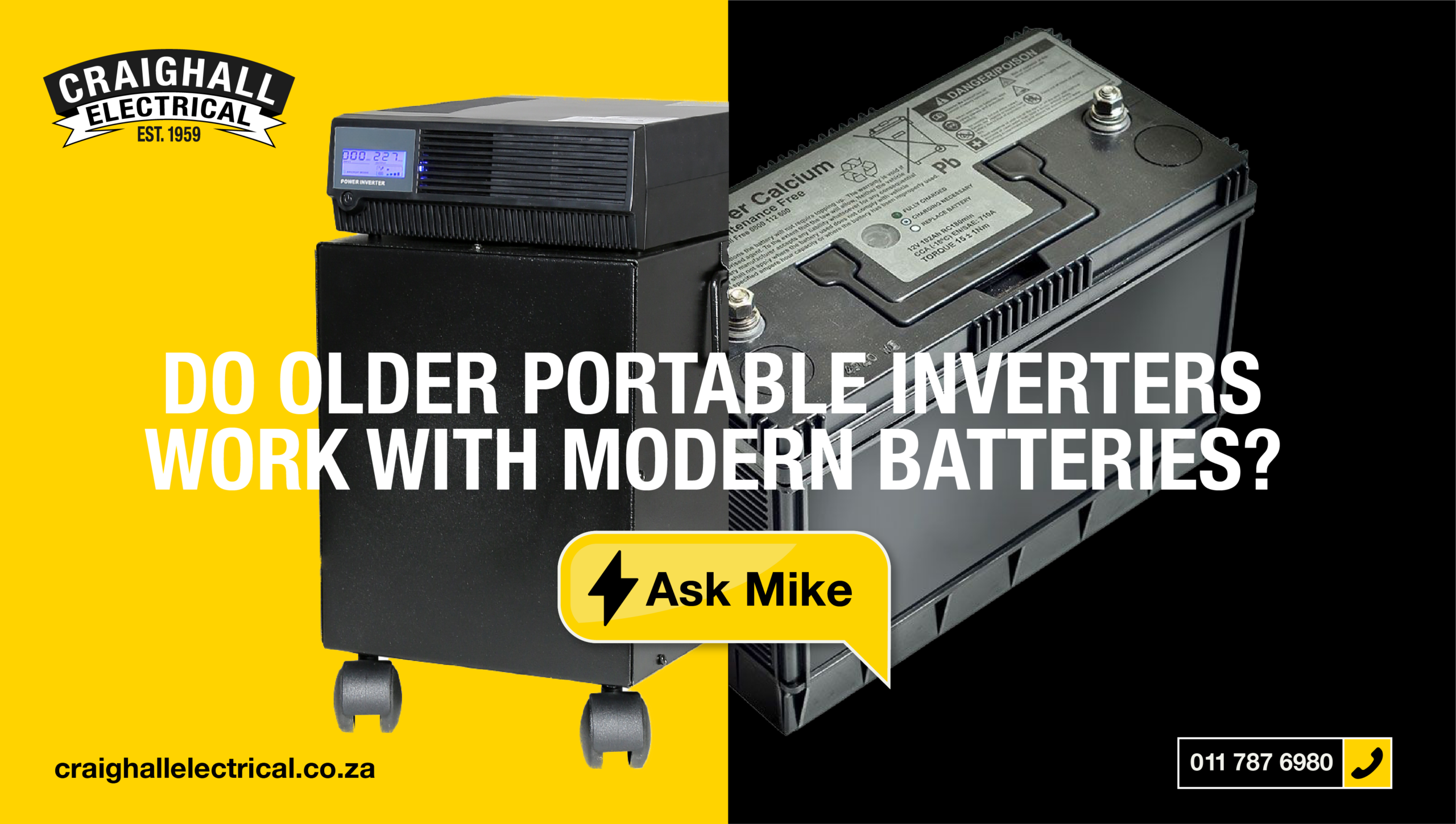
Why so many homeowners chose portable inverter systems during load shedding?
During the height of load shedding, many homeowners rushed to buy whatever backup power solution they could find just to keep the lights on.
Portable inverter systems flooded the market and for many people they did exactly what was needed at the time – quick, affordable backup power.
Now that the power situation has stabilised a bit, Mike says he’s getting more calls from homeowners asking questions about the systems they bought – especially when the battery isn’t performing the way they expected.
And one of the most common issues he’s seeing is battery failure.
Why portable inverter batteries fail and what Mike calls “dumb battery failure.”
Many of the portable inverter units that entered the market during peak load shedding weren’t designed with sophisticated battery management.
In simple terms, the inverter doesn’t always monitor or protect the battery properly.
Over time, the battery may be:
- overcharged
- deeply discharged
- cycled in ways it wasn’t designed for
From the outside everything can look fine. The inverter still switches on, and the lights still work – until suddenly the battery stops holding charge.
Mike refers to this as “dumb battery failure” – where the battery reaches the end of its life much sooner than it should because the system hasn’t managed it correctly.
Portable inverters do have their place: when is a portable inverter a good option for your home?
Mike is quick to point out that portable inverter systems are not inherently bad. In fact, he often recommends them for smaller or temporary backup needs.
They can work very well in situations such as:
- retirement homes
- holiday homes
- single-user households
- small offices
They’re also ideal for powering a few essential loads like:
- routers and internet equipment
- smart TVs or DSTV decoders
- laptop charging
- energy-efficient lighting
- bedside lamps and phone charging
Because they’re portable, they can even be moved around the house or taken to a holiday home.
For simple backup needs, they can be a practical and affordable option.
Problems usually start when people expect them to perform like a full household backup system.
Can you upgrade a portable inverter to lithium batteries?
The battery chemistry conversation is changing.
Another reason these questions are coming up more often is that battery technology has evolved quickly.
During the early 2020s many portable inverter systems relied on lead-acid batteries. These were cheaper but tend to have shorter lifespans, especially if they’re used heavily.
Today, the market offers newer battery chemistries such as:
- Lithium-Ion
- Lithium Iron Phosphate (LiFePO4)
- Sodium-Ion
When these batteries are used in properly designed systems, they can last many thousands of charge cycles.
But Mike cautions that upgrading older portable inverter systems is not always straightforward.
Many of those systems were designed specifically for lead-acid batteries. Their charging patterns and current rates aren’t always compatible with newer battery chemistries and can actually damage them.
So, in many cases, when a portable inverter battery fails, it’s often safer and more cost-effective to replace it with the same battery type rather than trying to retrofit a different chemistry.
What is a battery management system (BMS) and why does it matter?
Modern battery systems include sophisticated Battery Management Systems (BMS) that monitor things like:
- charge levels
- temperature
- cell balance
- charging patterns
These systems help protect the battery and optimise its lifespan.
Portable inverter systems often don’t have the same level of control, which is why the batteries in those systems may wear out sooner.
In a properly designed backup system, however, the inverter only charges the battery in accordance with its chemistry exact charge stage voltage, which significantly improves performance and longevity.
How long do inverter batteries last compared to battery systems?
The warranty difference many homeowners don’t realise.
Another key difference is battery lifespan and warranty.
Many portable inverter batteries come with manufacturer warranties of around two years.
By comparison, modern lithium battery systems used in fixed installations can offer 4,000 to 6,000 charge cycles or more, which often translates to eight to ten years of service life when properly installed and managed.
That’s a significant difference in long-term value.
Portable inverters do have their place: when are they a good option for your home?
Portable inverter systems
- Affordable entry-level solution
- Portable and easy to use
- Ideal for powering a few essential items
But they do have limitations around battery life, scalability and long-term performance.
A properly designed fixed battery backup system, on the other hand, is built around the electrical needs of the home or office – taking into account energy usage, duration of backup required and how the system may expand in the future.
When designed correctly, these systems are:
- more reliable
- better managed
- expandable if solar or additional batteries are added later
Mike’s top tip.
Before buying any backup power solution, Mike strongly recommends speaking to a qualified electrician first.
An electrician understands the relationship between load consumption, wiring, circuit distribution and backup duration and can advise whether a portable solution or a fixed battery system makes more sense.
Buying directly from a retailer might seem quicker or cheaper, but without proper advice, people often end up replacing equipment or redesigning systems later, which can cost far more in the long run.
A well-designed system should meet your needs today, protect your batteries properly and allow for expansion if your energy needs change.
That’s the difference between buying a product and designing a solution.
The right system depends on how you actually use power in your home.
Speak to Mike before you buy: askmike@craighallelectrical.co.za